
Introduction
The battery is the most critical component for the starting sequence of any diesel generator. Statistically, over 80% of "fail to start" conditions are directly related to battery neglect or charging system failures. In Kenya's tropical climate, lead-acid batteries are subject to faster evaporation and sulfation if not properly managed. If your unit is failing to crank, it's often a sign that you need a professional generator repair to audit the charging circuit.
Standby generators spend the majority of their life idle, relying on a static charger to keep the battery ready for a sudden start signal. If this delicate balance is disrupted by a faulty charger, loose connection, or aging battery, the entire backup power system becomes useless. In hotter regions like the lake basin, we frequently provide generator repair in Kisumu to replace batteries that have succumbed to heat-induced evaporation.
In this guide, we explore the mechanical and electrical reasons why a generator's battery system might fail and how to resolve these issues to ensure 100% reliability for your facility. A dead battery is the most frequent cause of a generator not starting, making it the first place any technician should look.
Diagnostic Symptoms
Battery issues often provide subtle warnings before a total failure occurs.
The "Clicking" Solenoid
A rapid clicking sound when attempting to start, indicating enough power to engage the solenoid but not enough to turn the motor.
Slow Cranking
The engine turns over sluggishly, failing to reach the required RPM for compression ignition.
Dimming Control Panel
The lights or digital display on the controller dim or flicker significantly during the cranking attempt.
"Low Battery" Alarms
The control panel displays persistent low voltage warnings even while the mains power is on.
Swollen Battery Case
Physical deformation of the battery, often caused by overcharging or extreme heat.
Primary Failure Vectors
1. Battery Sulfation & Age
When a battery is left in a low state of charge for extended periods, lead sulfate crystals form on the plates, reducing the battery's capacity to deliver high current (Cold Cranking Amps). In Kenya, most generator batteries have a reliable lifespan of 24-36 months before internal degradation makes them untrustworthy.
2. Faulty Static Battery Charger
Standby generators rely on a mains-powered charger to keep the battery topped up while the unit is idle. If this charger's fuse blows, or its internal circuitry fails, the battery will slowly discharge due to the control panel's parasitic draw, leading to failure when needed.
3. Corroded or Loose Terminals
Acid leaks and environmental moisture can cause corrosion at the battery terminals. This creates high electrical resistance. Even a perfectly healthy battery cannot deliver its power through a corroded or loose connection.
Diagnostic Protocol
Perform a Static Voltage Test
Use a multimeter to check the battery voltage while idle. A healthy 12V battery should show ~12.6V.
Test Voltage Under Load
The most accurate test is to measure voltage during a start attempt. If it drops below 9.6V, the battery is weak.
Clean and Tighten Terminals
Remove cables, clean terminals with a wire brush, and re-tighten firmly. Apply protective grease.
Check the Alternator Belt
Ensure the belt driving the engine alternator is tight. A slipping belt prevents proper charging during operation.
Frequently Asked Questions
Q:How long should a generator battery last?
In Kenya, a high-quality maintenance-free battery typically lasts between 2 and 3 years, depending on heat levels.
Q:Why is my battery charger getting very hot?
A very hot charger often indicates it is working at maximum capacity to charge a failing battery with a shorted internal cell.
Q:Can I jump-start my diesel generator with a car?
It is possible but risky. Diesel generators require much higher amperage than cars, which can damage sensitive electronics.
Battery & Charging Parts — Order Online
Order online — same-day dispatch in Nairobi, nationwide delivery in 1–3 days.
Not sure which part you need? WhatsApp our engineers — free technical advice.
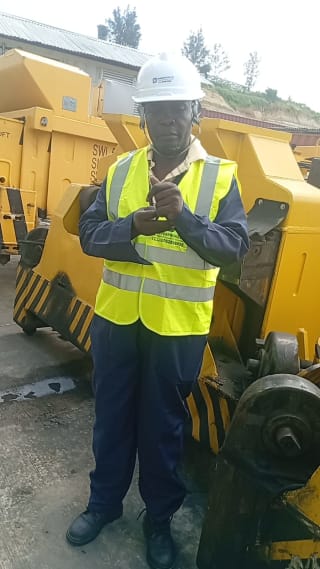
Eng. Okumu
Service Director - Head of 24 Hour Repair
Specialization
Electrical Systems & Charging Circuits
Experience
18+ Years Industrial Power Systems
All information in this guide has been field-verified by our engineering team to meet current Kenyan Energy Regulatory Authority (EPRA) standards and manufacturer-specific diagnostic protocols for Perkins, Cummins, and Caterpillar systems.