
Industrial Case Studies Engineering Reports
Real-world technical diagnostics, restorative engineering, and emergency power solutions for Kenya's critical infrastructure.

Technical Reviewer
Eng. Okumu Verified Expert
Case Study Consultation
Discuss your facility's power requirements with a senior generator technician.
1. Introduction: The Criticality of Standby Power in Kenya
In the industrial and commercial sectors of Kenya, standby power is not a luxury; it is a fundamental requirement for operational continuity. From the high-tech data centers in Nairobi to the sprawling manufacturing plants in Thika and the luxury hotels in Mombasa, the reliability of a diesel generator can determine the success or failure of a business day.
A generator failure during a grid outage is more than an inconvenience. In hospitals, it can jeopardize patient safety. In factories, it can lead to massive production losses and equipment damage due to sudden shutdowns. This pillar page serves as a comprehensive authority on industrial generator engineering, using real-world case studies to demonstrate the complexities of diagnostic engineering and restorative maintenance.
At PowerProKe Ltd, we believe that technical knowledge should be shared. By documenting our engineering interventions, we provide facility managers and engineers with the insights needed to identify potential failure points before they lead to catastrophic downtime.
2. Technical Overview: Understanding Generator Faults
Industrial generators are complex electromechanical systems where mechanical energy from a diesel engine is converted into electrical energy via an alternator. Troubleshooting these units requires a multi-disciplinary approach covering thermodynamics, electrical engineering, and digital control systems.
Primary Categories of Generator Failure:
- Mechanical Failures:
These involve the prime mover (the engine). Common issues include cooling system blockages, fuel injection timing errors, and internal wear of components like pistons or valves. Mechanical failures often manifest as overheating or excessive smoke.
- Electrical Failures:
These occur within the alternator or the distribution system. Faults in the Automatic Voltage Regulator (AVR), winding insulation breakdown, or exciter failure can lead to low voltage output or total loss of excitation.
- Control & Electronic Failures:
Modern units rely on sophisticated control panels (e.g., DeepSea, ComAp). Sensor drift, wiring harness corrosion, or software logic errors can cause "phantom" shutdowns or prevent the unit from synchronizing with the grid.
The importance of professional generator diagnostics cannot be overstated. Guesswork in industrial engineering leads to expensive part-swapping and unresolved root causes.
3. Common Generator Problems Encountered in the Field
Through our extensive service history across Kenya, we have identified several recurring issues that plague industrial standby units.
Overheating Shutdowns
Often caused by mineral scaling in the radiator or failing thermostats. This is a critical issue in high-ambient temperature regions like Mombasa.
Troubleshooting GuideLow Voltage Output
Usually traced back to a faulty AVR or loss of residual magnetism in the exciter field.
Troubleshooting GuideFuel System Contamination
Water ingress or microbial growth (diesel bug) in bulk storage tanks can destroy high-pressure injectors.
Troubleshooting GuideStarting Failures
The #1 cause of standby failure. Usually related to poor battery maintenance or a failing starter motor.
Troubleshooting Guide4. Comprehensive Generator Engineering Services
PowerProKe Ltd provides a full spectrum of engineering services designed to maximize the lifespan and reliability of your power assets.
Emergency Repair & Restoration
Our field technicians are equipped with advanced diagnostic tools for on-site generator repair. We handle everything from top-end engine overhauls to alternator rewinding.
Preventative Maintenance Programs
Scheduled generator maintenance is the key to preventing 90% of common failures. We provide customized service contracts for industrial facilities.
Advanced Diagnostics & Load Testing
Using load bank testing, we stress-test your unit to ensure it can handle 100% of its rated capacity without overheating or frequency drift.
Professional Installation & Commissioning
Correct generator installation involves proper ventilation, exhaust routing, and ATS integration. We ensure your unit is commissioned to manufacturer standards.
5. Industrial Case Studies: Engineering in Action
The following case studies represent real-world technical challenges encountered by PowerProKe Ltd engineers across Kenya. Each entry provides a systematic breakdown of the diagnostic process, the root cause identified through empirical testing, and the restorative engineering solution implemented.
Hotel Generator Overheating: Perkins 2506C Restoration
The Challenge: A premier hotel in Nairobi's Westlands district experienced a critical shutdown of their 500kVA Perkins standby unit during a 3-hour grid outage. The unit tripped on "High Engine Temperature" after only 45 minutes of operation at 70% load.
Diagnostic Process: Our engineers performed a thermal imaging scan of the radiator core, which revealed significant "cold spots," indicating internal blockages. A pressure test of the cooling system showed that the thermostat was failing to open fully at the rated 82°C. Furthermore, a chemical analysis of the coolant revealed high mineral content, suggesting the use of untreated tap water for top-ups.
Engineering Solution: We performed a high-pressure "rod-out" of the radiator core to remove mineral scaling. The faulty thermostat was replaced with an OEM Perkins part. The system was then flushed with a descaling agent and refilled with Extended Life Coolant (ELC) mixed with deionized water.
Factory Generator Low Voltage: Stamford Alternator Diagnostics
The Challenge: A large-scale manufacturing plant in Thika reported that their 800kVA generator was producing unstable voltage, fluctuating between 310V and 340V (Phase-to-Phase). This instability caused the Variable Frequency Drives (VFDs) on the production line to trip on "Under-Voltage," halting the entire facility.
Diagnostic Process: Our electrical team isolated the Automatic Voltage Regulator (AVR) and performed a manual excitation test using a 12V DC battery source (flashing the field). The alternator produced a stable, albeit low, voltage, confirming the main windings were intact. Further testing of the AVR's sensing circuit revealed a failed capacitor and a drifted potentiometer.
Engineering Solution: We replaced the faulty AVR with a genuine Stamford MX321 unit. During installation, we also identified and repaired a loose connection in the exciter stator wiring that was contributing to the voltage drift. The unit was then re-calibrated for precise voltage droop and stability.
Hospital Generator Shutdown: Cummins QSK23 Fuel System Failure
The Challenge: A major referral hospital in Eldoret faced a life-threatening situation when their primary standby Cummins unit failed to start during a grid outage. The 1000kVA unit would crank but fail to fire, leaving the ICU and surgical theaters on UPS power with limited runtime.
Diagnostic Process: Our emergency response team arrived on-site and performed a fuel system pressure test. We found zero pressure at the common rail. Further investigation revealed air ingress in the fuel lines. A vacuum test identified a hairline crack in the water separator housing, likely caused by over-tightening during a previous unauthorized service.
Engineering Solution: We replaced the entire primary filtration assembly and the electronic lift pump. The fuel system was bled using a vacuum priming tool to ensure no air pockets remained in the high-pressure lines. We also updated the control panel firmware to provide earlier warnings for fuel pressure deviations.
Construction Site Generator: Fuel System Microbial Growth Remediation
The Challenge: A major road construction project in Kisumu reported intermittent stalling and power loss on their 250kVA prime power unit. The engine would run for 2-3 hours and then lose RPM, eventually shutting down with a "Low Fuel Pressure" alarm.
Diagnostic Process: Our technicians inspected the primary fuel filters and found a thick, black, gelatinous substance clogging the elements. A fuel sample taken from the bottom of the bulk storage tank revealed significant water contamination and "diesel bug" (microbial growth). The high humidity and temperature in Kisumu had accelerated the growth of Hormoconis resinae at the fuel-water interface.
Engineering Solution: We performed a complete fuel tank "polishing" process, circulating the fuel through a 2-micron centrifugal separator to remove water and biomass. The entire fuel system, including the fuel pump and lines, was treated with a high-concentration biocide. All filters were replaced with high-efficiency water-separating elements.
Perkins Generator Starter Motor: Solenoid Contact Restoration
The Challenge: A commercial high-rise in Nakuru reported that their 150kVA Perkins generator failed to crank during a routine weekly test. The control panel displayed a "Start Fail" alarm. The facility manager noted a distinct "clicking" sound but no engine rotation.
Diagnostic Process: We first verified the battery bank's state of charge (SOC) and found it at a healthy 12.8V DC. A voltage drop test during the start attempt showed that the voltage at the starter motor terminal remained high, indicating the problem was internal to the starter. Upon disassembly, we found heavily pitted solenoid contacts and worn carbon brushes that were no longer making consistent contact with the commutator.
Engineering Solution: We performed a comprehensive overhaul of the starter motor. This involved replacing the solenoid assembly, installing new high-conductivity carbon brushes, and resurfacing the commutator on a lathe. The bendix drive was also cleaned and re-lubricated with high-temperature grease to ensure smooth engagement with the flywheel ring gear.
Cummins Generator Alternator: Stator Winding Insulation Restoration
The Challenge: A 1000kVA Cummins unit at a port facility in Mombasa suffered a catastrophic stator winding short-to-ground. The unit had been in standby service for 8 years in a highly humid, saline environment. During a routine load test, the alternator emitted smoke and tripped on "Earth Fault."
Diagnostic Process: We performed an insulation resistance (IR) test using a 1000V Megger, which returned a reading of 0.2 MΩ—well below the minimum 100 MΩ required for safe operation. A polarization index (PI) test confirmed that the insulation was deeply saturated with moisture and salt deposits. A surge test identified the specific phase-to-phase short in the end-windings.
Engineering Solution: The stator was removed and transported to our specialized workshop. We performed a "Burn-off" and "Rewind" using Class H high-temperature copper wire. The new windings were treated with a Vacuum Pressure Impregnation (VPI) process using a moisture-resistant epoxy resin. We also installed anti-condensation heaters in the alternator housing to prevent future moisture ingress.
Geothermal Site Generator: Alternator Bearing Failure & Laser Alignment
The Challenge: A prime power 500kVA unit at a geothermal exploration site in Naivasha developed a high-frequency vibration and a metallic "grinding" noise. Vibration analysis showed a peak at the bearing fundamental frequency, indicating imminent failure of the drive-end bearing.
Diagnostic Process: Our mechanical engineers used a laser alignment tool to check the coupling between the engine flywheel and the alternator rotor. We found a parallel misalignment of 0.8mm—well outside the 0.1mm tolerance. This misalignment had placed excessive radial load on the alternator bearing, leading to premature fatigue and spalling of the outer race.
Engineering Solution: We replaced the failed drive-end bearing with a high-performance SKF Explorer series bearing. The alternator was then precision-aligned to the engine using a dual-beam laser system. We also replaced the flexible coupling elements which had been damaged by the heat generated by the misalignment.
6. Major Generator Brands Supported in Kenya
Kenya's industrial landscape is dominated by several key global brands. PowerProKe Ltd provides specialized engineering support for all of them.
Perkins Generators
Widely used in hotels and commercial buildings. Known for their reliability and parts availability in Kenya. We specialize in the 1100, 2000, and 4000 series engines.
Cummins Generators
The preferred choice for data centers and heavy industry. We provide expert support for Cummins G-Drive engines and PowerCommand controllers.
FG Wilson Generators
Common in telecom and banking sectors. We support the full range of FG Wilson enclosures and control systems.
Caterpillar (CAT) Generators
Heavy-duty units used in mining and large-scale manufacturing. We provide diagnostic and repair services for CAT digital voltage regulators and ADEM controllers.
7. Industries Relying on PowerProKe Ltd Engineering
Different industries have unique power requirements. Our engineering solutions are tailored to the specific needs of each sector.
8. Regional Service Areas: Powering Kenya
PowerProKe Ltd operates a national network of field technicians, ensuring rapid response times in all major economic hubs.
9. Knowledge Hub: Technical Guides & Tools
Explore our library of technical resources designed for facility managers and engineers.
Maintenance Guides
Troubleshooting
Engineering Tools
10. Frequently Asked Questions
How often should an industrial generator be load tested?
We recommend a full load bank test at least once a year. This ensures the unit can handle its rated capacity and helps prevent 'wet stacking' by burning off unburnt fuel and carbon deposits in the exhaust system.
What is the most common cause of generator failure in Kenya?
Statistically, starting failures due to poor battery maintenance are the most common. However, in industrial settings, fuel contamination and cooling system blockages are the leading causes of shutdowns during actual operation.
Can PowerProKe Ltd support generators in remote locations?
Yes. We have mobile field units that provide generator repair and maintenance services across all 47 counties of Kenya, including remote mining and agricultural sites.
Why is regular oil analysis recommended?
S.O.S oil analysis identifies internal engine wear by measuring metal concentrations. This allows us to predict component failure before it occurs, saving you from catastrophic engine rebuilds.
Secure Your Facility's Power Reliability
Industrial generator engineering is a high-stakes field where technical precision saves lives and protects businesses. At PowerProKe Ltd, we bring 15+ years of field experience to every diagnostic call and maintenance visit.
Don't wait for a grid failure to find out your standby system is compromised. Contact our engineering team today for a comprehensive audit of your power infrastructure.
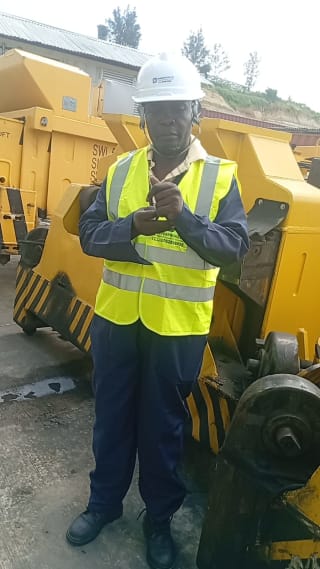
Eng. Okumu
Lead Technical Reviewer & Auditor
Specialization
Alternator Rewinding & Precision Servicing
Experience
18+ Years Industrial Power Systems
All information in this guide has been field-verified by our engineering team to meet current Kenyan Energy Regulatory Authority (EPRA) standards and manufacturer-specific diagnostic protocols for Perkins, Cummins, and Caterpillar systems.