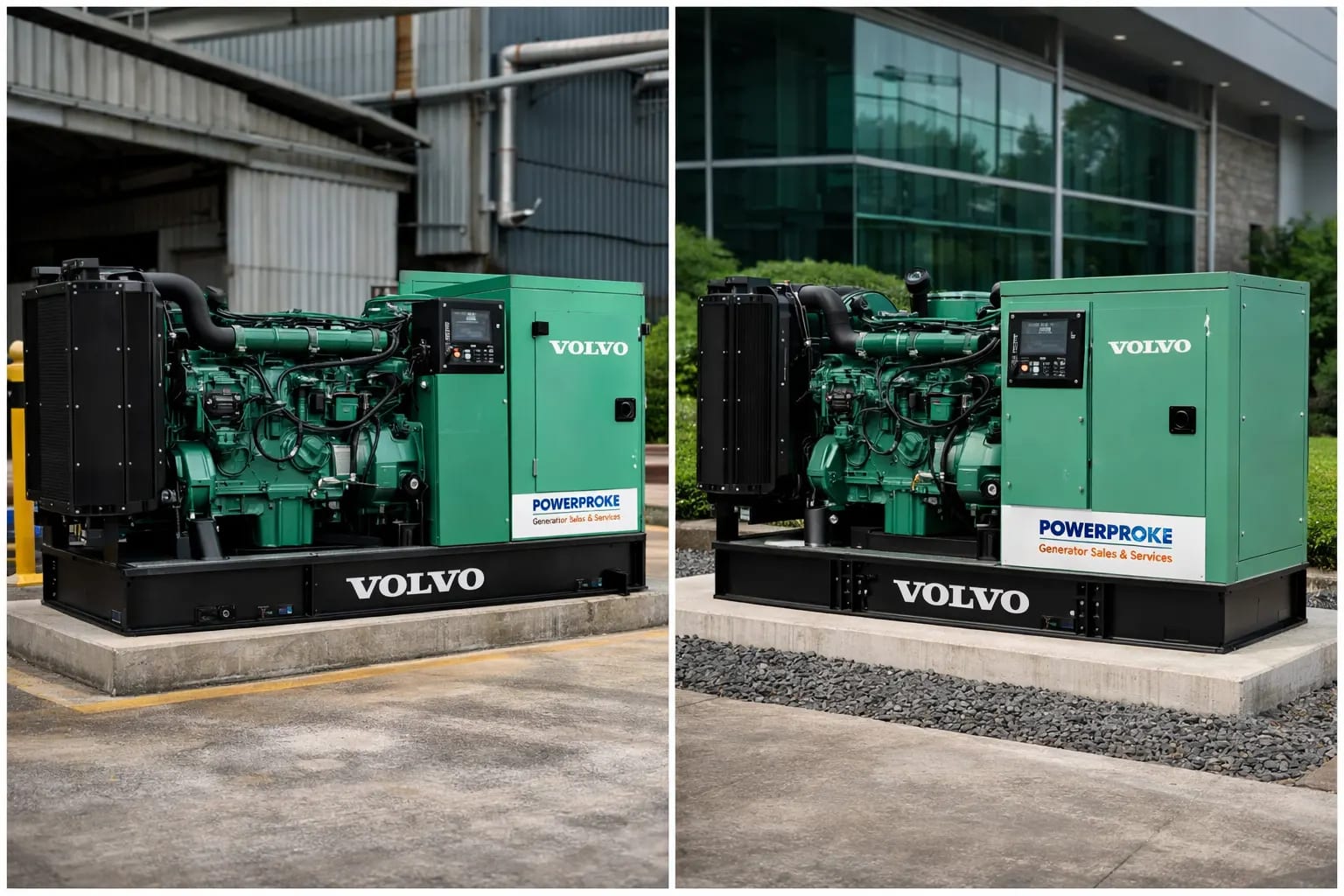
Generator Repair for Logistics & Industrial Hubs in Embakasi
PowerProKe Ltd provides heavy-duty generator engineering for Embakasi's logistics hubs, cold storage facilities, and industrial complexes. We specialize in high-hour maintenance, turbocharger optimization, and bulk fuel integrity.
Powering Embakasi's 24/7 Supply Chain
Embakasi is the logistical heart of Nairobi, anchored by the Inland Container Depot (ICD), Jomo Kenyatta International Airport (JKIA), and massive warehousing complexes. Standby power in this zone is not about basic lighting; it is about sustaining the national supply chain. Generators here run heavy, continuous loads to power cold storage compressors, automated sorting belts, and 24-hour security perimeters.
The operating environment in Embakasi presents severe mechanical challenges. High levels of airborne particulate matter from heavy truck traffic and industrial activity rapidly clog engine air intakes. Furthermore, during extended grid outages, generators in these facilities often run continuously for 24 to 72 hours. This extreme duty cycle accelerates wear on alternator bearings, degrades engine oil viscosity, and exposes weaknesses in fuel delivery systems.
PowerProKe Ltd engineers specialize in high-hour, heavy-duty generator maintenance. We implement aggressive filtration strategies, conduct vibration analysis on rotating assemblies, and manage bulk fuel quality for large-capacity tanks. Whether you rely on a 500kVA Perkins for a perishable goods warehouse or a synchronized Cummins plant for a manufacturing facility, we provide the technical intervention required to prevent catastrophic engine failure.
Our expertise extends to industrial generator repair and remote monitoring solutions that allow logistics managers to track fuel levels and engine health in real-time across multiple sites.

JKIA Proximity & Aviation Logistics
Facilities operating near Jomo Kenyatta International Airport (JKIA) face unique power security requirements. For air-freight forwarders and ground handling agents, a power failure during cargo processing can lead to missed flight windows and massive financial penalties.
We provide specialized support for airport-adjacent infrastructure, focusing on Automatic Transfer Switch (ATS) reliability and Uninterrupted Power Supply (UPS) integration. Our technicians ensure that the transition from grid to generator is seamless, preventing data loss in logistics management systems and maintaining the integrity of temperature-controlled air cargo.
Precision timing to prevent out-of-phase re-transfer to the grid.
Ensuring generator frequency stability for sensitive UPS bypass logic.
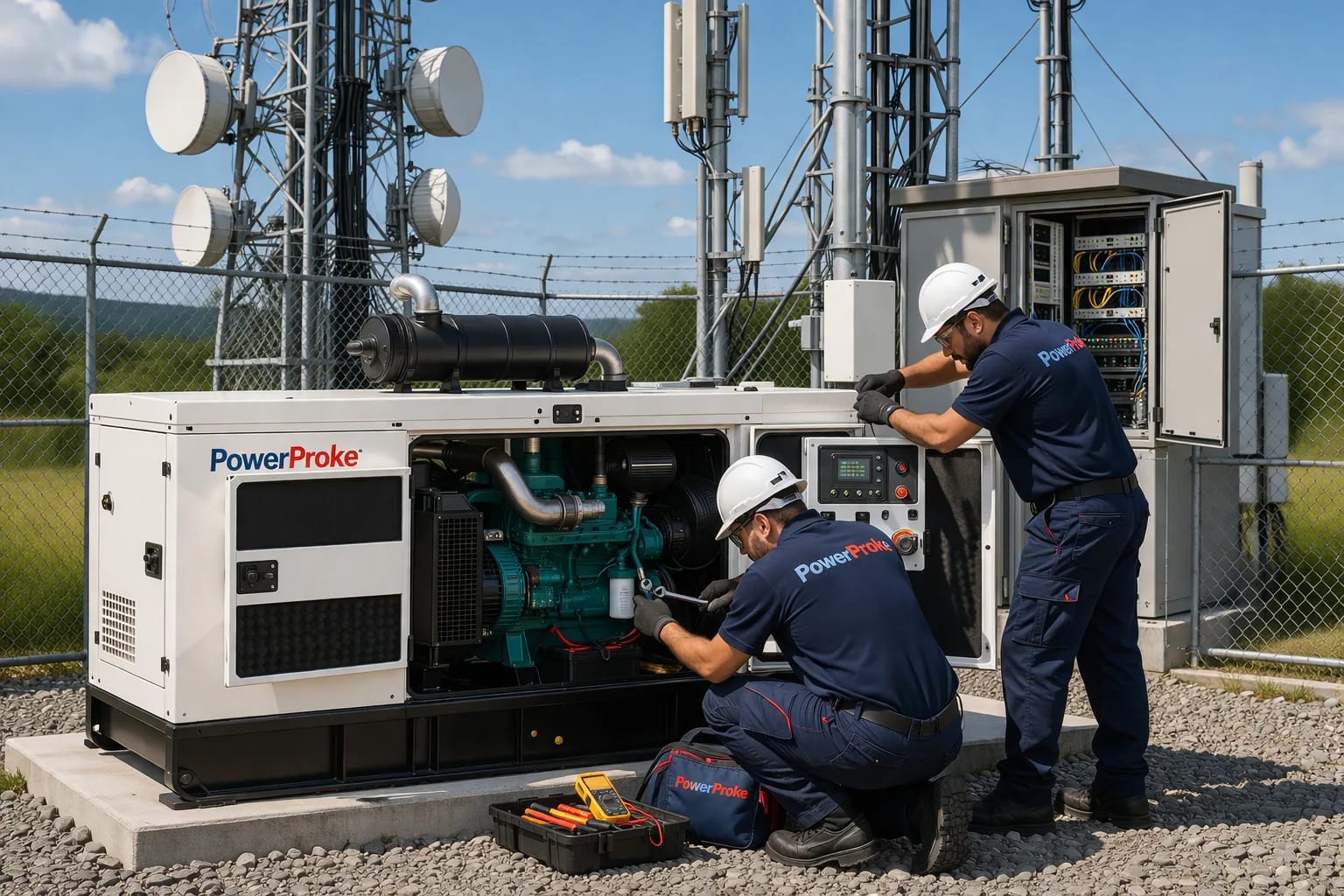
Mission-Critical Power for Global Trade
In the logistics sector, the generator is not a backup—it is a primary insurance policy against supply chain disruption. We treat it with the engineering rigor it deserves.
- 124/7 Priority Response for JKIA-adjacent facilities
- 2Load-shedding logic for non-essential warehouse lighting
- 3Redundant starter motor configurations for critical units
- 4High-speed governor response for automated sorting lines

Bulk Fuel Integrity & Tank Management
Logistics hubs in Embakasi often maintain bulk storage tanks ranging from 5,000 to 20,000 liters. While necessary for long-term autonomy, these tanks are breeding grounds for "Diesel Bug" (microbial contamination) and water accumulation.
Fuel Polishing Protocols
We deploy high-flow mobile filtration units to remove water and particulates down to 2 microns, restoring fuel to ISO 4406 cleanliness standards.
Biocide Treatment
For tanks showing signs of sludge, we administer industrial-grade biocides to eliminate microbial colonies and prevent filter blinding.
The Cost of Contamination
Modern High-Pressure Common Rail (HPCR) engines, like those in Volvo and Scania generators, operate at pressures up to 30,000 PSI. A single drop of water or a microscopic particle can shatter an injector tip, leading to a KSh 500,000+ repair bill and immediate engine failure.
Air Filtration & Turbocharger Optimization in Industrial Zones
The Embakasi industrial corridor is characterized by high concentrations of dust, soot, and metallic particles. For a diesel engine, this is a hostile environment. A standard air filter can become restricted in as little as 100 running hours.
When air intake is restricted, the turbocharger must spin faster to maintain boost pressure, leading to excessive heat and bearing wear. This "vacuum effect" can also pull engine oil past the turbo seals, causing blue smoke and potential engine runaway.
- Dual-Element Filtration: We specify heavy-duty primary and secondary filters for all Embakasi sites.
- Restriction Indicators: We install and calibrate mechanical and electronic restriction gauges to alert operators before failure.
- Aftercooler Cleaning: We perform ultrasonic cleaning of aftercoolers to ensure maximum air density for combustion.
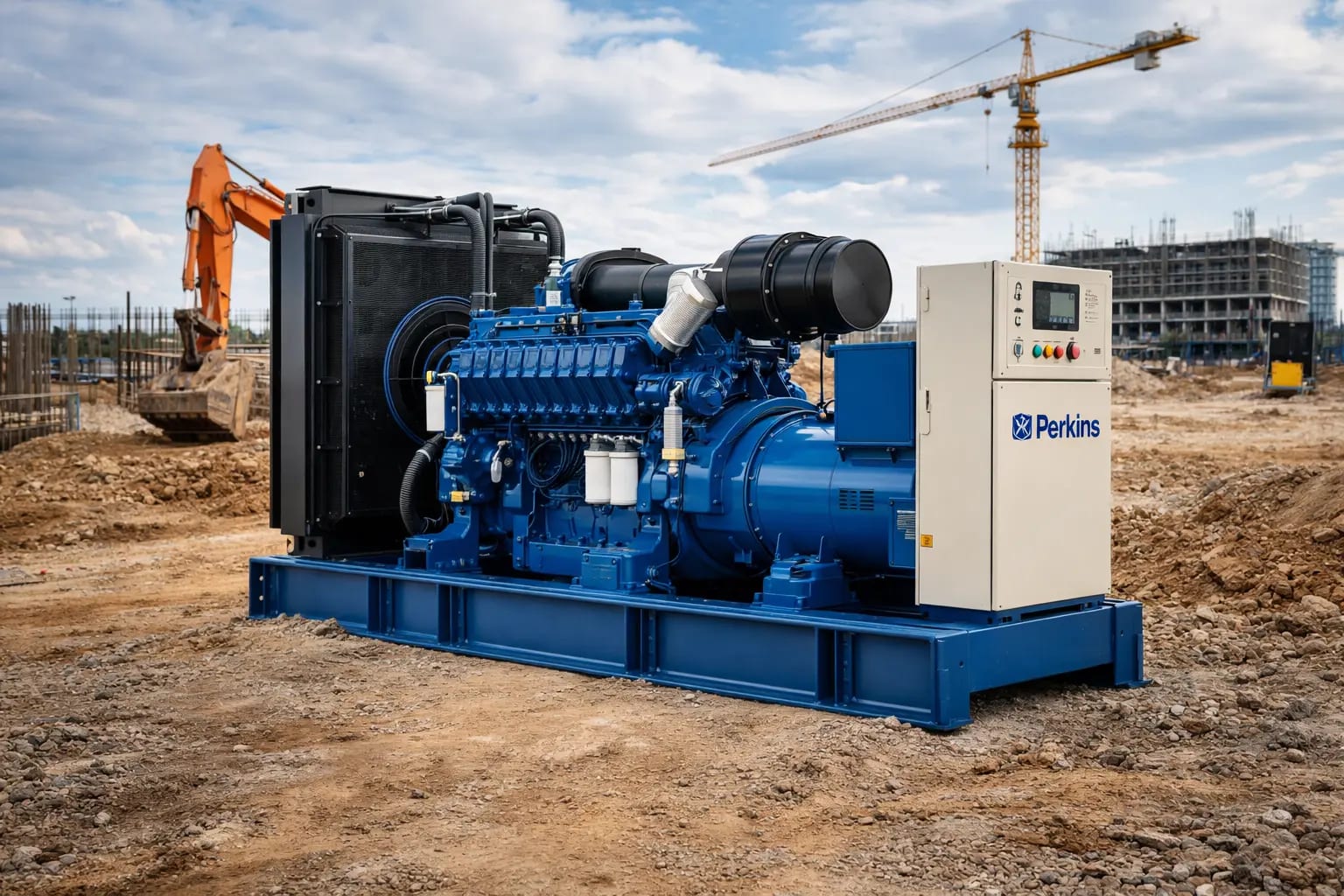
Turbocharger Health Indicators
Measured with a dial indicator to ensure shaft stability within OEM tolerances.
Real-time manifold pressure testing to verify turbocharger efficiency under full load.
Inspection of the compressor and turbine housings for signs of oil bypass.
Cold Storage & Perishables: Managing LRA & Voltage Dips
In Embakasi's cold storage facilities, the primary load consists of massive refrigeration compressors. These motors draw **Locked Rotor Amps (LRA)**—a surge of current 6 to 10 times their running rating—every time they cycle on.
If the generator's alternator and Automatic Voltage Regulator (AVR) are not correctly specified, this surge causes a "Voltage Dip." If the dip exceeds 15-20%, the compressor's own contactors will chatter or drop out, potentially damaging the motor and causing a total loss of cooling for perishable goods.
AVR Stability
We calibrate the AVR's UFRO (Under Frequency Roll Off) to allow the engine to recover speed without collapsing the voltage.
Step-Load Testing
We use resistive/reactive load banks to simulate compressor starts and verify the generator's transient response.
Excitation Upgrades
For critical cold storage, we recommend Permanent Magnet Generator (PMG) excitation for 300% short-circuit current capability.
Remote Monitoring & Telematics
For logistics hubs with multiple generators across large sites, manual monitoring is inefficient. We install advanced telematics systems (DeepSea Gateway, ComAp WebSupervisor) to provide real-time visibility.
Fuel Level Tracking
Ultrasonic fuel sensors provide ±1% accuracy, alerting you to sudden drops (potential theft) or low levels before the generator runs dry during a long outage.
Engine Health Alerts
Receive instant SMS/Email notifications for "High Coolant Temp", "Low Oil Pressure", or "Battery Voltage Low" before they cause a shutdown.
Remote Start/Stop
Test your generators remotely or force a start during scheduled maintenance without sending a technician to the far end of the warehouse.
Industrial Load Profiles in Embakasi
Facilities in the Embakasi corridor draw aggressive, continuous loads. Our maintenance protocols are built around these specific operational stresses.
Facility Power Characteristics
- Cold Storage & PerishablesIndustrial refrigeration compressors require massive starting torque (Locked Rotor Amps). The generator's alternator and Automatic Voltage Regulator (AVR) must be robust enough to handle these sudden inductive spikes without dropping voltage and tripping the compressor contactors.
- Logistics & WarehousingOperations run 24/7. Generators must be capable of prime power operation (continuous running) rather than just standby operation. This requires superior cooling system efficiency and strict adherence to 250-hour oil change intervals.
- Light ManufacturingThree-phase industrial motors, conveyor systems, and packaging machinery create non-linear loads and harmonic distortion. We ensure the alternator windings are rated to handle these harmonics without overheating.
Common Generator Faults in Embakasi
Our service logs from the Embakasi area, and surrounding neighborhoods highlight mechanical failures directly linked to the environment and extended runtimes.
Air Intake Restriction & Turbo Failure
High levels of dust and exhaust soot from Mombasa Road traffic rapidly clog primary and secondary air filters. This creates a vacuum effect, forcing the turbocharger to overwork. The engine runs rich (producing black smoke), loses power, and eventually suffers turbo seal failure.
Alternator Bearing Collapse
Generators running continuously for days during major grid faults put immense thermal and mechanical stress on the alternator's main bearing. Lack of periodic greasing or vibration from uneven mounting causes the bearing to shatter, leading to catastrophic stator/rotor collision.
Bulk Fuel Contamination
Logistics hubs store thousands of liters of diesel. Condensation in these large tanks breeds microbial growth (sludge). When the generator runs, this sludge is pulled into the fuel lines, instantly blinding the water separators and destroying high-pressure fuel injectors.
Cooling System Overheating
Dust accumulation on the radiator fins severely restricts airflow. Combined with continuous heavy loads, the engine coolant temperature exceeds safe limits (usually 95°C - 100°C), triggering an automatic shutdown by the Deep Sea Electronics (DSE) controller.
Engine Shutting Down Under Load?
If your generator starts but shuts down after 10-15 minutes of running a heavy facility load, check the DSE panel for "High Coolant Temp" or "Low Oil Pressure" alarms. Do not attempt to bypass these sensors, as doing so will result in engine seizure.
Read our technical troubleshooting guideIndustrial Services in Embakasi
Heavy-duty maintenance and repair for continuous-run power systems.
Heavy Engine Overhauls Embakasi
We execute top-end and major engine overhauls for high-hour units. This includes replacing cylinder liners, piston rings, main bearings, and reconditioning cylinder heads to restore lost compression and eliminate oil burning.
Generator Maintenance Embakasi
Tailored for the Embakasi environment. We implement shortened service intervals (e.g., 200 hours instead of 250), utilize heavy-duty dual-element air filters, and perform chemical radiator flushing to maintain cooling efficiency.
Bulk Fuel Polishing Embakasi
Essential for logistics hubs with large diesel reserves. We deploy mobile filtration skids to circulate tank fuel, removing water, sediment, and microbial growth down to 2 microns, protecting your engine's common-rail injection system.
Alternator & AVR Repair Embakasi
We replace shattered alternator bearings, test rotating rectifier diodes, and install heavy-duty Automatic Voltage Regulators (AVRs) capable of handling the massive inrush currents of industrial refrigeration compressors.
Technical Service Checklist for Logistics Hubs
Our maintenance protocols for Embakasi are designed for high-availability environments where downtime is not an option.
Why Choose Us?
24/7 Emergency Dispatch
Supply chains do not sleep. We maintain standby engineering teams ready to deploy to Embakasi at any hour.
Heavy-Duty Expertise
Our technicians are trained specifically on high-capacity industrial engines (Perkins 4000, Cummins QSK).
Strict OEM Parts Policy
We source and install only genuine OEM filters and components to guarantee operational reliability.
Service Coverage Area
We dispatch heavy-duty technicians to all industrial and residential zones in the greater Embakasi region:
We cover the entire Nairobi Metropolitan region. View all Nairobi service areas.
Technical FAQ for Embakasi Industrial Power
How often should we service a generator running 24/7 during a grid fault?
If your generator is operating as prime power (running continuously), you must shut it down for an oil and filter change every 250 running hours. Pushing beyond this degrades oil viscosity, leading to severe main bearing and camshaft wear. In the dusty Embakasi environment, we often recommend checking air filters every 100 hours and using heavy-duty dual-element filters to protect the turbocharger.
What is "Voltage Dip" and how does it affect our cold storage?
Voltage dip occurs when a large motor (like a compressor) starts, drawing high inrush current. If the generator's AVR and alternator aren't sized correctly, the voltage drops momentarily. If this dip exceeds 15%, it can cause contactors to drop out, stopping the cooling process. We solve this by installing PMG excitation systems and calibrating AVR transient response.
Why is our generator consuming excessive oil?
In environments like Embakasi, clogged air filters force the engine to pull a vacuum, drawing oil past the turbocharger seals or piston rings into the combustion chamber. It can also indicate worn cylinder liners requiring a top-end overhaul. We perform crankcase pressure tests and turbocharger axial play measurements to diagnose the exact cause.
The generator trips when the cold room compressors start. Why?
Compressors draw massive Locked Rotor Amps (LRA) upon startup. If the generator's AVR is faulty, or if the engine governor cannot respond fast enough to the sudden load step, the voltage and frequency drop, causing the DSE panel to initiate a protective shutdown. We calibrate AVR stability and UFRO settings to mitigate this.
How do we prevent "Diesel Bug" in our bulk storage tanks?
Microbial growth (diesel bug) thrives in the water-fuel interface at the bottom of tanks. We recommend regular fuel polishing to remove water and sediment, combined with biocide treatment to kill existing bacteria. For large Embakasi sites, we can install permanent fuel polishing systems that run automatically to ensure ISO 4406 cleanliness.
What is the impact of dust on generator alternators?
Dust acts as an insulator and an abrasive. It coats the alternator windings, preventing heat dissipation and leading to overheating. In industrial areas like Embakasi, we perform regular "blowing out" of alternators with dry compressed air and check the insulation resistance (Megger test) to prevent short circuits and winding failure.
Can we synchronize multiple generators for our warehouse?
Yes. Synchronization (paralleling) allows multiple generators to share the load. This provides N+1 redundancy—if one unit fails, the others can still power critical operations. It also improves fuel efficiency by running only the number of units required for the current load. We specialize in ComAp and DeepSea synchronization controllers for multi-megawatt logistics plants.
Our Service Area in Embakasi
Strategic technical response units stationed to serve Embakasi, Nairobi, and the surrounding industrial hubs.
Protect Your Supply Chain Operations
Do not let a generator failure halt your logistics or manufacturing facility. Contact our engineering team for heavy-duty diagnostics, rapid repairs, and industrial maintenance plans in Embakasi.