
The short answer
PowerProKe provides commercial generator repair and emergency breakdown response across Nairobi for hotels, hospitals, offices, factories and other facilities. We diagnose and repair faults on all major diesel generator brands, 24 hours a day. Call or WhatsApp +254 762 816 825, or submit the quick quote form on this page to get started.
Key takeaways
- Commercial generators in Nairobi face predictable failure patterns — fuel contamination, cooling faults, battery failures and alternator faults are the most common causes of unplanned breakdowns.
- The faster a fault is correctly diagnosed, the lower the repair cost and the shorter the downtime — rushing in parts before diagnosing the root cause almost always makes things worse.
- A generator that starts and runs does not necessarily have a clean bill of health — low-grade faults accumulate silently and surface at the worst moment.
- Emergency breakdown response is only one layer of protection; a structured maintenance programme is what prevents most breakdowns from happening at all.
- Nairobi facilities that operate on a single generator with no redundancy have zero tolerance for delayed repairs — the right engineer and the right parts need to be available quickly.
A commercial generator breakdown in Nairobi carries a cost that goes well beyond the repair bill. For a hotel, the cost is in guest experience and spoiled stock. For a hospital or clinic, it is patient safety. For an office block or shopping mall, it is tenant confidence and lost trading hours. For a factory or cold store, it is production downtime and product loss.
PowerProKe works with facility managers, operations teams and property owners across Nairobi to diagnose generator faults accurately, source the right parts, and carry out repairs that hold. This page explains the most common commercial generator faults we attend to in Nairobi, what proper diagnosis looks like, and when you need to act immediately. If your generator is down or struggling right now, call or WhatsApp +254 762 816 825 or use the quote form at the top of this page.
The Most Common Commercial Generator Faults in Nairobi
Most commercial generator breakdowns we attend in Nairobi trace back to a small number of recurring fault categories. Understanding them helps facility managers recognise early warning signs before a full breakdown occurs.
Fuel system faults are the single most frequent cause of generator failure in Nairobi. Contaminated diesel — water ingress, microbial growth, sediment — clogs fuel injectors and filters, causes erratic running, black smoke, low power output and hard starting. Tanks that are infrequently topped up and poorly sealed are especially vulnerable during Nairobi's wet seasons.
Cooling system failures — blocked radiators, failed thermostats, low coolant, seized water pumps — lead to overheating shutdowns. A generator that shuts on high temperature mid-load is one of the most disruptive faults a facility can experience. See our detailed guide to generator overheating causes and fixes if your set has been shutting down on high temperature.
Battery and starting faults account for a large proportion of generators that fail to start when called upon. Batteries that are never exercised, chargers that have failed silently, and corroded terminals are common findings. A set that cranks slowly or fails to crank at all under emergency conditions is a serious reliability risk.
Alternator and AVR faults produce low voltage, unstable voltage or total loss of output. These are sometimes misdiagnosed as control panel faults, which wastes time and money. Correct diagnosis — measuring excitation, checking the AVR, testing the rotating diodes — is essential before any parts are ordered.
Control panel and ATS faults prevent automatic starting or load transfer. A generator that runs perfectly in manual mode but will not start automatically under a mains failure offers no real protection to a commercial facility.
What Accurate Diagnosis Actually Looks Like
The most expensive generator repairs we see in Nairobi are not the large jobs — they are the jobs where the wrong part was fitted first, the fault returned, and the set was eventually handed to us after weeks of unsuccessful attempts by others.
Accurate generator diagnostics begins with a structured visual inspection and a review of fault codes and alarm history on the control panel. A good technician reads what the generator has recorded before touching anything. Engine parameters — oil pressure, coolant temperature, battery voltage, output voltage and frequency — are checked under load, not just at idle.
For fuel system faults, this means tank sampling, filter inspection and injector testing — not simply replacing filters and hoping. For alternator faults, it means excitation testing and diode checks, not swapping an AVR on assumption. The diagnosis drives the repair; the repair does not drive the diagnosis.
If your set has been worked on before without resolving the fault, a generator health audit will establish the true condition of every major system and give you a clear report to work from.
Emergency Breakdown Response Across Nairobi
When a commercial generator fails during a mains outage, the priority is restoring power as quickly as possible — but not at the cost of making the fault worse. Isolating the fault correctly and safely is the first step; a generator that is repeatedly cranked on a seized engine or run on a blocked cooling system will sustain damage that turns a minor repair into a major one.
PowerProKe provides 24-hour generator repair and emergency breakdown response across Nairobi. Our engineers attend with diagnostic equipment and a stock of the most commonly required parts for the generator brands we work on. We cover Nairobi's central business district, industrial area, Westlands, Karen, Kilimani, Embakasi and surrounding areas.
To reach us immediately: call or WhatsApp +254 762 816 825. Have the generator's make, model, kVA rating and the fault symptoms ready — this allows us to arrive with the right tools and parts for your specific set.
Nairobi's Commercial Sectors and Their Generator Demands
Different commercial operations in Nairobi place very different demands on their standby generators, and those demands shape both the failure modes and the urgency of repair.
Hospitals and clinics operate on zero-tolerance terms — any gap between mains failure and generator pickup is clinically significant. Automatic transfer must be reliable, and the engine must reach stable voltage within seconds. Fuel quality and battery health are non-negotiable.
Hotels run large mixed loads — HVAC, lifts, kitchen equipment, cold rooms, lighting — and a generator that cannot sustain rated load, or that produces unstable voltage, will cause visible disruption to guests. Overloading and voltage instability are common complaints.
Manufacturing and cold storage facilities need generators that can handle large motor starting currents and sustain continuous load for extended periods. Engine overheating and fuel exhaustion are the most common breakdown causes at these sites.
Commercial buildings and offices often have generators that are tested infrequently and maintained irregularly. When mains power fails for an extended period, the generator may start — but then develop a fault after an hour or two of running that it would never have shown on a brief weekly test.
Regardless of sector, the principle is the same: a generator that is not regularly and properly maintained will eventually fail at the moment it is most needed.
When a Repair Is Not Enough: Overhaul and Longer-Term Reliability
Some generators that come to us for emergency repair have underlying mechanical wear that a single repair cannot address. An engine that has accumulated thousands of running hours without a major service interval, or that has been run repeatedly on low oil pressure or high temperature, may need an engine overhaul rather than a fault repair.
Signs that a deeper assessment is warranted include: excessive oil consumption, blue or white exhaust smoke under load, low compression, persistent overheating despite cooling system repairs, or a pattern of recurring faults with no clear root cause.
For facility managers who want to understand the true condition of their generator before committing to repair spend, a generator health audit provides a structured assessment of all major systems — engine, cooling, fuel, electrical and control — with written findings and recommendations. This is particularly useful for generators that were inherited with a facility, have an incomplete service history, or are approaching a major overhaul milestone.
Longer term, the most cost-effective way to manage commercial generator reliability is a structured generator maintenance contract — scheduled preventive maintenance, genuine parts, documented service records, and priority access to emergency response when you need it.
What to Check Before Calling an Engineer (and When Not to Wait)
There are a small number of safe checks a facility manager or site supervisor can carry out before an engineer arrives — checks that may identify a simple cause and that give the attending technician useful information.
These are covered in the checklist below. However, there are situations where you should not attempt any checks and should call immediately: if there is a burning smell, visible damage, smoke from the generator, a fuel leak, or any indication of electrical arcing. In those situations, isolate the generator using the main isolator if it is safe to do so, and call us.
Generator Fault: What to Check Before the Engineer Arrives
- 1Check the fuel level on the day tank gauge — a surprising number of callouts are resolved by refuelling.
- 2Check the coolant level at the expansion tank (engine must be cold before opening the cap).
- 3Check the battery terminals for visible corrosion or loose connections — do not attempt to tighten live connections.
- 4Look at the control panel display for any fault codes or alarm messages — write them down exactly as shown.
- 5Check whether the generator is in AUTO, MANUAL or OFF mode on the control panel selector.
- 6Check the oil level on the dipstick — engine must be off and on level ground.
- 7Note the approximate running hours shown on the hour meter if visible.
- 8Check whether the Automatic Transfer Switch (ATS) has tripped or shows a fault indicator.
Stop and call an engineer if: Call an engineer immediately — without carrying out further checks — if you see smoke from the generator enclosure, smell burning insulation or fuel, see a fuel or coolant leak on the ground, notice visible damage to wiring or the control panel, or if the generator has shut down on an alarm and you do not know the cause. Never attempt to restart a generator that has shut down on a high-temperature or low-oil-pressure alarm without a qualified engineer inspecting it first.
Generator Down? Contact Us Now
Call or WhatsApp PowerProKe on +254 762 816 825 for emergency generator repair and breakdown response across Nairobi, or use the quote form at the top of this page to describe your fault and we will respond promptly.

Related guides & services
Frequently Asked Questions
How quickly can PowerProKe respond to a commercial generator breakdown in Nairobi?
PowerProKe provides 24-hour emergency generator repair and breakdown response across Nairobi. Response time depends on your location within Nairobi and current demand. Call or WhatsApp +254 762 816 825 directly for the fastest response — have your generator's make, model, kVA rating and fault symptoms ready.
My generator starts but shuts down after a few minutes — what is likely causing this?
A generator that starts and then shuts down on a fault alarm is most commonly experiencing a cooling system fault (overheating), a low oil pressure condition, a fuel supply restriction, or an electrical overload. Each of these will typically produce a specific alarm code on the control panel. Note the alarm code and call an engineer — attempting to restart the set repeatedly without diagnosing the cause can cause serious engine damage.
Can a commercial generator be repaired on-site, or does it need to be taken away?
The majority of commercial generator repairs — including fuel system work, cooling system repairs, battery and starter faults, AVR and alternator repairs, and control panel faults — are carried out on-site in Nairobi. Major engine overhauls sometimes require workshop attendance, but this is the exception rather than the rule.
My generator is running but producing low or unstable voltage — is this an emergency?
Low or unstable voltage is a serious fault. It can damage sensitive equipment connected to the generator and indicates a problem with the alternator, AVR, rotating diodes or, in some cases, engine speed regulation. The generator should be isolated from the load and an engineer called — do not continue running critical equipment on an unstable supply.
How do I know whether to repair or replace an ageing commercial generator?
The decision depends on the generator's running hours, its service history, the nature and cost of the repair required, and the availability of spare parts for that model. A generator health audit gives you an objective, documented assessment of all major systems and helps you make that decision on facts rather than guesswork. Contact PowerProKe to arrange an audit before committing to either option.
Commercial generator reliability in Nairobi is not a matter of chance — it is the result of consistent maintenance, accurate diagnosis when faults occur, and the right engineer attending with the right parts. A generator that has never caused a problem is not necessarily a healthy generator; it may simply not have been tested hard enough yet.
If your facility is experiencing a breakdown right now, call or WhatsApp +254 762 816 825 and we will attend as quickly as possible. If your generator is running but you have doubts about its condition — perhaps it has an incomplete service history, has been showing minor faults, or is simply due for a proper check — consider booking a generator health audit to establish exactly where you stand. For ongoing peace of mind, ask us about an Annual Maintenance Contract that keeps your set properly serviced, documented and supported throughout the year.
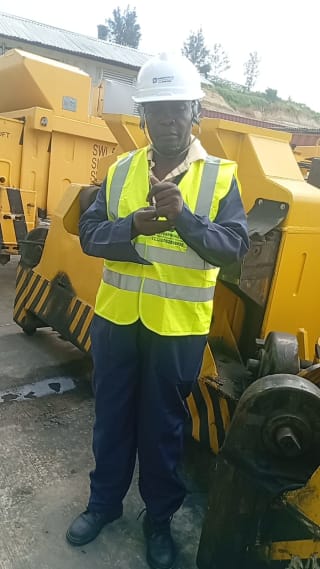
Eng. Okumu
Lead Technical Reviewer & Auditor
Specialization
Alternator Rewinding & Precision Servicing
Experience
18+ Years Industrial Power Systems
All information in this guide has been field-verified by our engineering team to meet current Kenyan Energy Regulatory Authority (EPRA) standards and manufacturer-specific diagnostic protocols for Perkins, Cummins, and Caterpillar systems.